HeatBodies: Urban Sensing
Designing a privacy-first thermal sensor to understand activities and flows in public urban spaces using edge compute and binary data output.
Sensing has become an important and rapidly demanded method of understanding our built environment — from understanding the energy performance at a building scale to using footpaths on the street. These demands come from increasing efficiency, optimizing performance, and creating a path forward backed by empirical evidence.
HeatBodies set out to test what it would require to develop and design a sensor with privacy in mind. Our team took an interest in understanding what activities and flows in our public space are like — requiring us to understand how much data is needed, our end-use cases, and potential sensor configurations.
A lot of what we call "tech" today lies within device-level applications. However, urban tech operates in a grey and currently undefined area. The device layer is the city, and the applications are the deployments of sensors within that device.
No individual user within the city can make decisions on data governance — it lies either with the city or with the urban tech company's altruism. We must demand and understand how we think of privacy policies in the public domain.
Through an iterative process, we realized that privacy through software alone was not entirely perfect — it required a hardware level of intervention. We aimed to implement a thermal sensor built with an edge compute node that can quickly process and output binary data without ever requiring raw data storage.
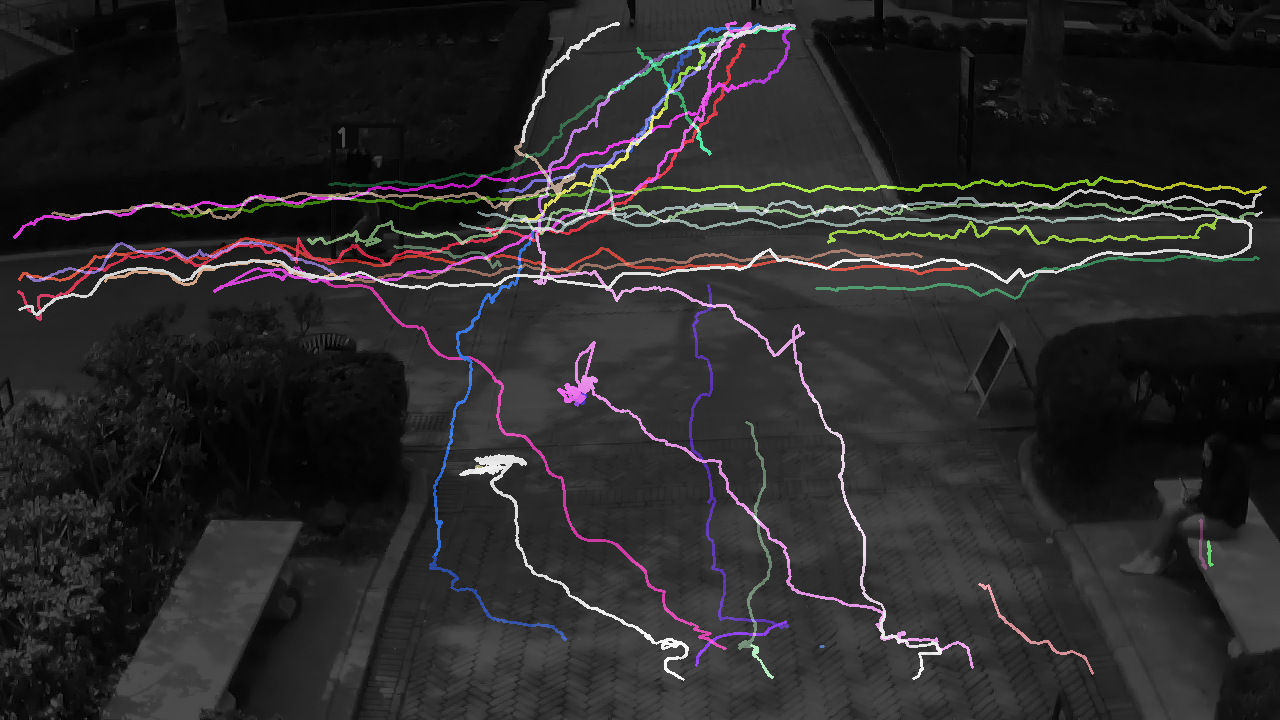
Using existing computer vision algorithms to create human tracks, we set out to understand and enumerate our public spaces within Avery Hall. Through experimentation and analysis, we tested and learned of the costs and benefits of using such hardware in our public domain.
The project demonstrated that a privacy-first sensing approach is technically feasible at a reasonable cost. By processing data at the edge and outputting only binary occupancy signals, we were able to understand aggregate flows in public space without storing or transmitting any personally identifiable information.
